
Think about what makes a World Cup truly unforgettable. Sure, it’s the impossible goals, the underdog stories, the heartbreak of penalty shootouts. But there’s one element that’s been there for every single magical moment on the pitch, and we rarely give it a second thought: the ball itself.
The story of the World Cup football is genuinely wild. We’ve gone from heavy leather spheres that turned into water bombs when it rained, to high-tech marvels with sensors inside them. The ball hasn’t just changed in appearance—it’s fundamentally altered how the game is played. Let’s trace this remarkable journey.
The Early Days: When Footballs Were Weapons (1930-1966)
The first World Cup balls were basically medieval torture devices by today’s standards. Picture thick leather panels stitched together with laces that stuck out like on an old American football. These things were heavy, unpredictable, and honestly a bit scary.
Uruguay 1930 (T-Model): Here’s a fun fact that sounds made up but isn’t—the very first World Cup final didn’t even have one official ball. Argentina and Uruguay literally played with different balls for each half. Can you imagine that happening today?
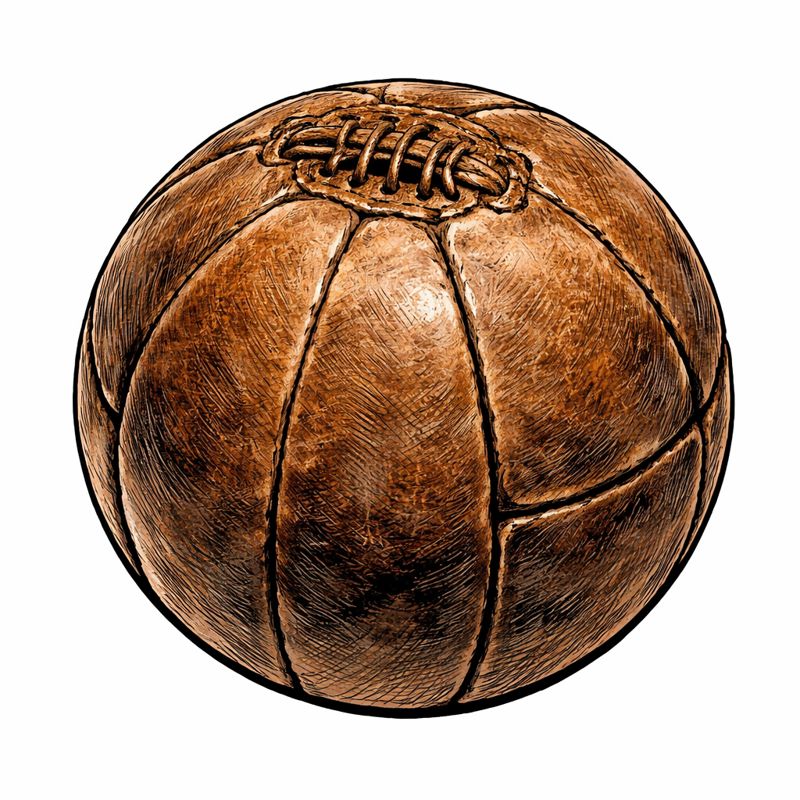

England 1966 (Challenge 4-Star): This represented the pinnacle of traditional leather craftsmanship. When conditions were dry, it performed beautifully. But the moment rain started falling? The leather would soak up water like a sponge, sometimes doubling the ball’s weight. Players who headed these waterlogged monsters often ended up with neck pain or worse. There are stories of defenders literally dreading rainy matches because of this.
The Adidas Revolution: Enter the Telstar (1970)
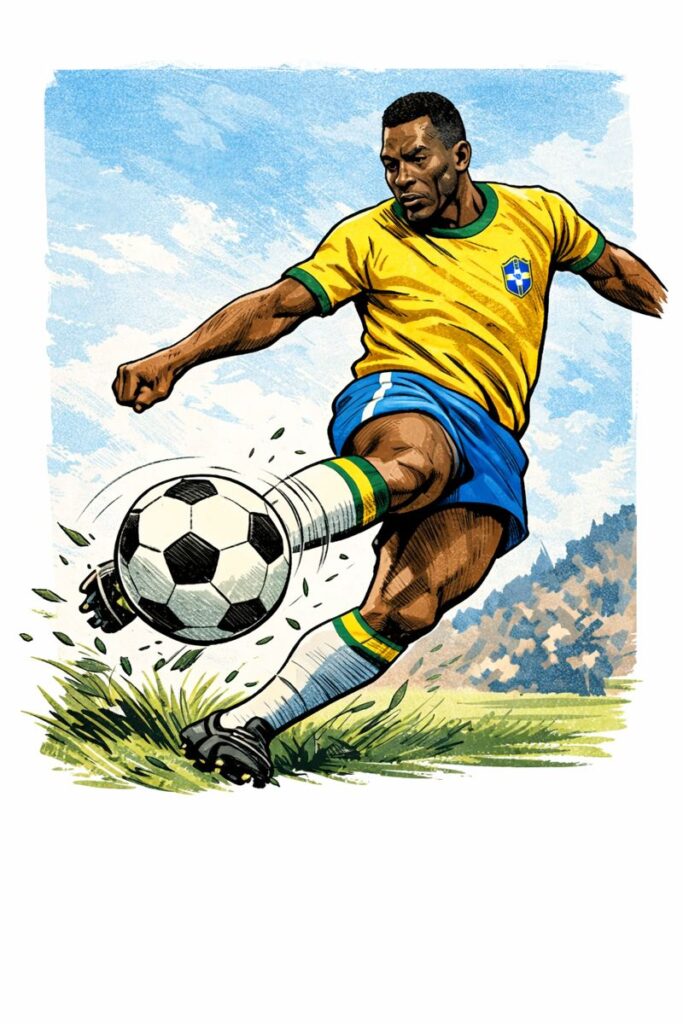
Mexico 1970 marked a turning point. Adidas stepped in as the official supplier and brought us the Telstar—a ball that would become the most recognizable design in sports history.
That iconic pattern of black pentagons and white hexagons (32 panels total, based on a “Buckminster Ball” design) wasn’t just for show. Since most people still watched on black-and-white TVs, those black patches made the ball visible and trackable on screen. Clever, right? This design became so ingrained in our collective consciousness that even today, when kids draw a football, they often sketch those black pentagons.

The Tech Wave Begins: Tango to Azteca (1978-1986)
Football was getting faster, more technical. The ball had to evolve or become obsolete.
Argentina 1978 (Tango): Adidas introduced a 20-panel design with interconnected “triads” that created this mesmerizing optical illusion of circles. The design was so successful it stuck around for nearly two decades in various iterations.
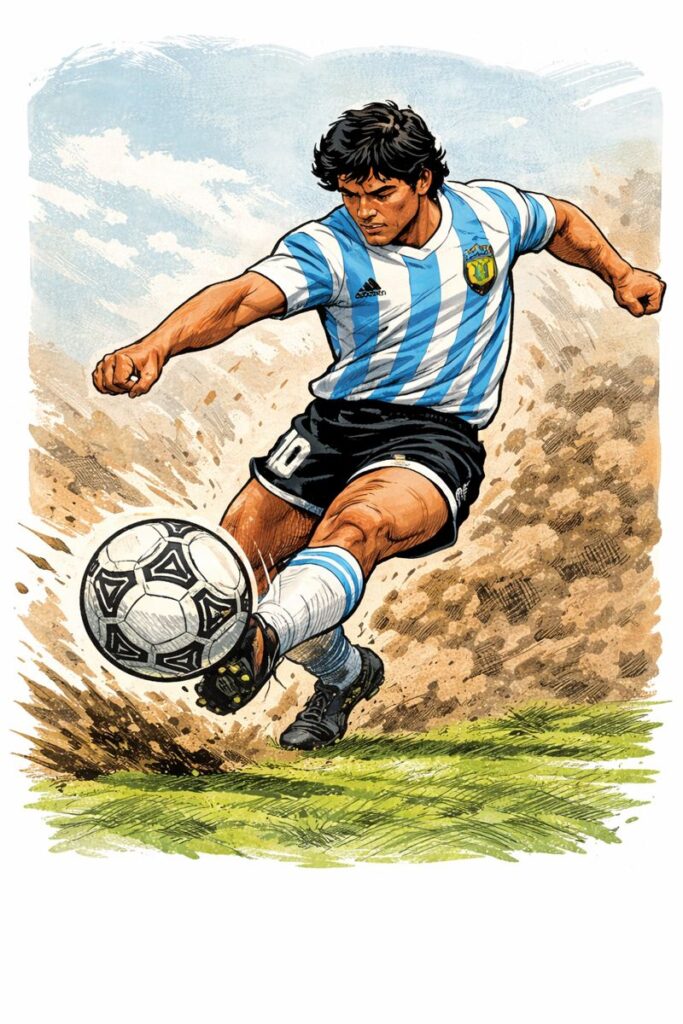
Mexico 1986 (Azteca): This is where everything changed. The Azteca became the first fully synthetic World Cup ball. No more leather. No more water absorption. Rain or shine, the ball performed exactly the same. Maradona’s “Hand of God” and his legendary solo goal both happened with this ball—the first of a new generation.

The Speed Demons: When Things Got Controversial (1994-2010)
The ’90s brought synthetic polymers, foam layers, and a focus on making balls faster and more responsive. Not everyone was thrilled.
USA 1994 (Questra): A polystyrene foam layer made this ball softer and significantly faster. Strikers loved the extra zip on their shots. Goalkeepers? Not so much.
South Africa 2010 (Jabulani): Oh boy. This ball earned a reputation as one of the most hated pieces of equipment in sports history. With just 8 thermally bonded panels and “Grip’n’Groove” texture, it was supposed to be revolutionary. Instead, it became chaos incarnate. The ball would swerve, dip, and wobble in ways that defied physics. Goalkeepers openly complained, with some calling it a “beach ball” or “supermarket ball.” Even world-class keepers like Iker Casillas struggled with its erratic flight paths. The technology was impressive, but maybe a bit too ambitious.
The Modern Era: Finding the Balance (2014-2022)
After the Jabulani debacle, Adidas went back to the drawing board with a new philosophy: stability, precision, and player testing.
Brazil 2014 (Brazuca): This gorgeous six-panel design was put through its paces by over 600 professional players during development. The result? A ball that felt natural, flew predictably, and performed consistently. Players and keepers alike praised it. Sometimes simpler really is better.
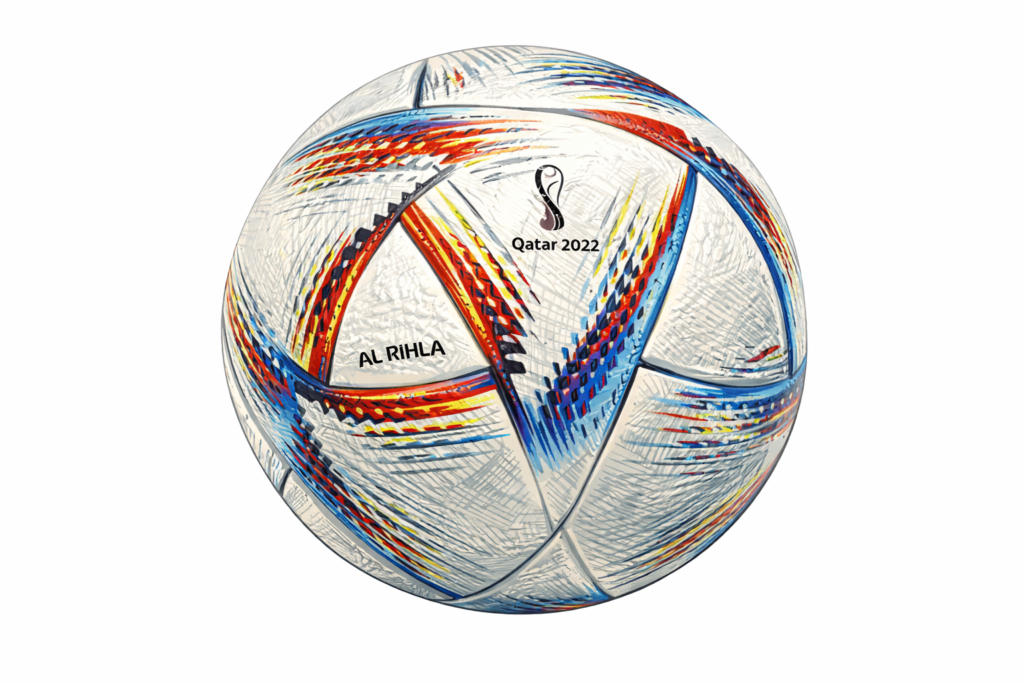
Qatar 2022 (Al Rihla): The fastest World Cup ball ever recorded in flight, but speed wasn’t its only party trick. Hidden inside was Connected Ball Technology—a sensor that transmitted data in real-time to help referees make split-second offside calls. We’ve come a long way from arguing over which ball to use in each half.

Why This Actually Matters
It’s easy to dismiss ball design as cosmetic tinkering, but these changes have genuinely transformed football. The lightweight, aerodynamic balls we use today have enabled the spectacular 30-yard screamers, the pinpoint through-balls, and the curl on free-kicks that make us jump off our couches. Players like Roberto Carlos and Cristiano Ronaldo built techniques around what modern balls could do.
As we head toward future tournaments, the ball sits at this fascinating intersection of tradition and innovation. It’s part of football’s soul, but it’s also a testament to how far sports science has come. Not bad for something that started as stitched leather and hope.